Walking the Same Path: Why People Living with Dementia Need Peer Support Too

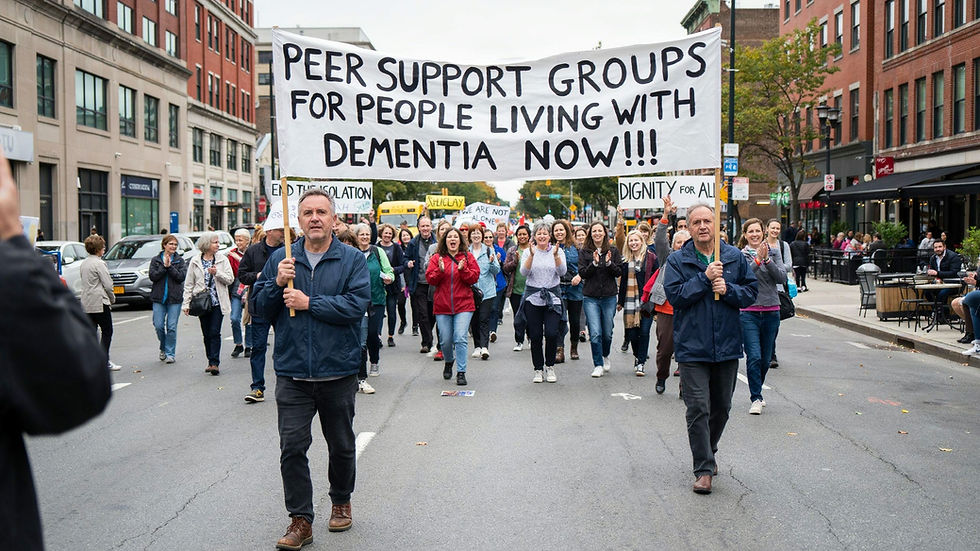
In the weeks, months and years that follow a diagnosis of dementia, support usually mobilises, but it almost always mobilises around the wrong side of the equation.
The Great Support Imbalance
If you look at the landscape of dementia services in almost any community, you’ll spot an immediate pattern. Caregiver support groups, spouse coffee mornings, training workshops for relatives, and online forums dedicated to coping with the strain of caring are common. But where are the peer support groups for people like me?
Carer support is undeniably vital and deserves every ounce of funding it receives. Looking after a loved one with cognitive decline is exhausting and emotionally taxing. But this focus creates a glaring disparity.
peer support is vastly more available to carers than to us people actually living with the diagnosis.
Too often, the person diagnosed is treated as the passive subject of care rather than an active individual navigating their own reality. If groups exist for those diagnosed, they are often run as “respite sessions”, places to be looked after while carers meet in the next room, or as generic day centres that don’t distinguish between early-stage insight and advanced decline.
People like me who are living with dementia don’t just need care; we need community. We need genuine peer support with people walking in the exact same shoes.
The Relief of Not Having to Pretend
When you live with cognitive changes, the daily performance of appearing “fine” is draining. You spend enormous energy masking forgotten words, pretending you followed a fast conversation, and covering up minor stumbles so you don’t worry your family or attract pity.
In a peer support group exclusively for people diagnosed with dementia, the mask comes off.
There’s an immediate, palpable sigh of relief when you sit in a room where everyone understands the invisible effort. If you lose your train of thought, no one interrupts or finishes the sentence with an anxious look. If the word for “kettle” escapes you, someone laughs and nods because the same thing happened to them that morning. In that shared space, memory slips are normalised rather than scrutinised.
Practical Wisdom You Won’t Find in a Medical Pamphlet
Doctors can explain pathology, prescribe medication, and monitor symptoms. What they usually can’t tell you is how to navigate an airport when the signs stop making sense, which phone apps make daily reminders effortless, or how to handle the quiet grief of surrendering a driving licence.
That practical wisdom comes directly from peers.
Peer groups operate as collective toolboxes. Members exchange realistic, lived strategies for staying independent:
Which smart devices genuinely reduce friction at home without feeling overwhelming.
How to manage social fatigue and gracefully step away from loud family gatherings.
Ways to talk openly to grandchildren without frightening them.
This isn’t clinical advice delivered from across a desk; it’s field-tested survival knowledge passed between equals.
Reclaiming Identity and Purpose
A diagnosis tends to shrink a person’s world. Friends may pull away out of awkwardness, hobbies may be abandoned prematurely out of embarrassment, and self-confidence may take a heavy hit. Over time, an individual risks becoming entirely defined by their condition.
Peer support actively counters that shrinkage. Being part of a group restores reciprocity. For months, you may have felt like the person who is always being checked on, reminded, guided, and helped. In a peer group, you can listen, comfort, advise, and encourage someone else who was diagnosed only last week.
Giving support can be just as healing as receiving it. It reminds you that your insights, humour, and empathy are entirely intact.
Bridging the Gap
It is time for dementia care culture to shift. While we must continue to support family carers fiercely, we cannot continue treating the person with the diagnosis as an afterthought in community building.
Meaningful, autonomous peer groups, run with and for people living with dementia, are not a luxury or a social diversion.
They are an essential lifeline that preserves dignity, sustains confidence, and proves that while dementia alters the road ahead, nobody has to walk it alone.


I think your blog is so right at the cafes and singing for the brain there is nothing for the person with the diagnosis