Outdoor Therapy
- Peter Middleton
- Feb 22
- 5 min read


It’s a funny thing, isn't it? The way the world starts to feel like it is shrinking once you get a diagnosis like young-onset dementia. One day, you're juggling a career, a mortgage, and a hectic social calendar, and the next, you feel like you're being wrapped in bubble wrap by well-meaning relatives.
People start looking at you with those "tilted head" expressions, as if you might break if the wind blows too hard. Even so, I have learned that the world doesn't have to shrink; I can keep my life vibrant and open by actively stepping outside into nature.
I'm writing this from my small back garden in the Midlands, tea cooling by my elbow and the scent of damp earth from flower beds. After a rain (this is England), the garden glows that vivid green only a downpour brings.
I've always been a keen walker, but since my dementia journey began, I’ve realised the outdoors is not just somewhere pleasant. It is vital to my well-being to live fully with this diagnosis.
The Great Escape from the Four Walls
With dementia, even your own house can feel confusing. Walking into a room and forgetting why, or finding the TV remote baffling, becomes normal. This brings a hum of frustration and anxiety that lingers.
When internal noise creeps in, it fades as I step through the back door. The sky has no corners. The clouds don’t need me to remember keys. Nature simply exists, inviting me to join. Whether I stroll in the woods, weed lightly, or sit at the bus stop watching the world, being outside reminds me I’m part of a bigger picture.
Why Nature Feels Like a Reset Button
Outdoor settings deepen the mind-body connection. While science explains why we feel better outside, I call it "soul maintenance." Young people with dementia are often physically fit and full of energy, but their brains hit frequent hurdles. Nature-based physical activity offers an ideal outlet for that restless energy.
Indoors, artificial lights and noises dominate. Outside, real sensations; the breeze, the crunch of gravel, the smell of lavender - ground me. This sensory experience brings me from worry back to my body.
Even in the UK’s lack of sun, being outdoors helps regulate body rhythm and sleep. A walk, even on a grey day, usually ensures I rest better at night.
Staring at a confusing list of emails can feel overwhelming. But standing at the top of a hill, I feel small in a good way; a part of a vast landscape that puts brain fog into perspective.
Gardening: My Secret Weapon
This relationship with the outdoors also reshaped how I feel about gardening. I wasn’t much of a gardener before. It seemed a Sunday chore. Now, it’s my therapy. Planting bulbs is satisfying and simple - you just need dirt and patience, not a complicated plan.
Gardening marks time when dementia blurs days. The garden tells me it’s winter when snowdrops appear, summer when roses bloom - a living calendar I trust without checking a phone.
Even a window box or a pot empowers. Nurturing plants lets me give care, not just receive. Sometimes I rub mint or rosemary; one sharp scent, and my mind clears.
Overcoming the "What Ifs"
I know many wonder: What if I get lost? What if I get lost or have a moment of confusion in public?
These are real fears, but not a prison. Start with small steps and have a safety net ready.
I carry a card with my dementia diagnosis and my wife’s number. I’ve never needed it, but its presence reassures me.
I walk a familiar route. The landmarks mean my brain isn’t working overtime, so I can enjoy being outdoors.
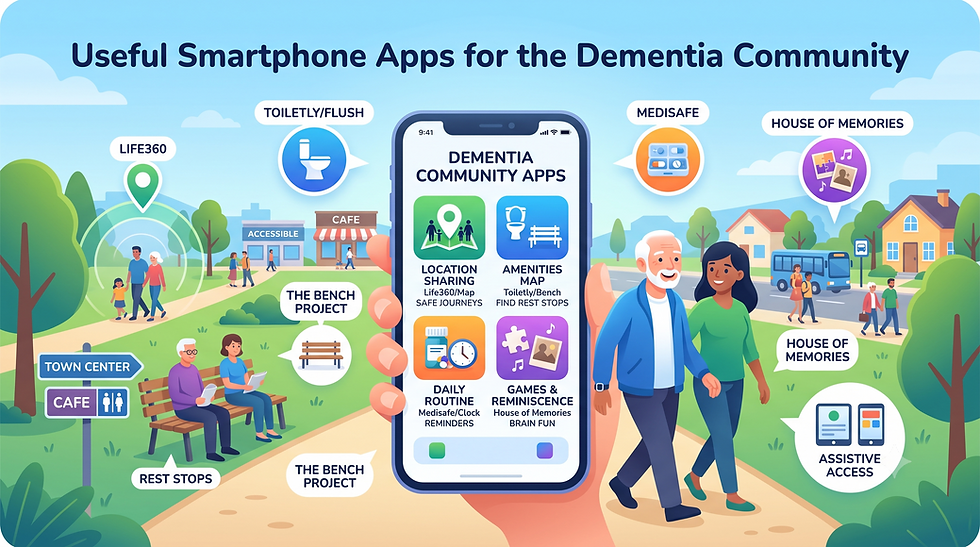
I use a simple GPS app on my phone. If I do feel unsure about where I am, I can just look at the blue dot on the map, which reassures me and keeps the panic at bay.
If you can get near water - a canal, a lake, or the seaside. Do it! The movement of water is incredibly soothing and hypnotic. A walk along a towpath is flat, easy to follow, and usually full of friendly ducks who don't care about your diagnosis.
Join Historic Houses, English Heritage, The National Trust or your local Wildlife Trust. They have some wonderful events and are very dementia friendly.
You don't have to be rich or have transport to plan out an interesting rural or city walk. Your local Heritage Centre probably has some great ideas.
Social Connection without the Pressure
The benefits of nature go beyond the physical; they also touch the social. One of the hardest parts of young-onset dementia is socialising; dinner parties and loud pubs overwhelm. Keeping up with conversation and names is exhausting.
Outdoors changes the dynamic. Walking side by side removes pressure; no need for eye contact or constant talk. You can just point out a bird or comment on leaves; it’s a relaxed way to connect.
People are often more relaxed outside. You meet dog walkers or hikers, and a simple greeting is enough to feel part of the community without stress.
Finding the Magic in the Mundane
You don’t have to climb mountains to benefit. Some of my best moments happen in the local park—just sitting, listening, and identifying five different sounds anchors me in the present.
It’s a kind of mindfulness. For those of us with dementia, the “now” is most important. The sunshine on your skin right now is real and yours.
My Advice to You (and Your Care Partners)
If you’re living with this, don’t let walls close in. Push back against the urge to stay indoors. Safety is important, but so is vitality. Start with your coat, your trainers, and a short stroll. Go a little farther tomorrow.
And to the partners and family members: let us get a bit muddy. Let us get a bit wet in the rain. Don't worry so much about the "defence" against the elements that you forget to let us experience them. Some of the best moments I have with my family now are the ones where we are all out in the woods, laughing because the dog has jumped into a boggy pond. In those moments, I am not a "patient", and they are not "carers." We are just a family on a walk.
Final Thoughts from the Garden
The sun is dipping, and the air is chillier; it's time to head in for dinner. But I feel better—my head lighter, my shoulders less tense, and my brain’s hum now a quiet purr.
Dementia takes a lot away; there is no denying that. It nibbles at your memories and tries to steal your confidence. But even with these challenges, nature remains a constant source of comfort and connection. The sky, the smell of the sea, or the feeling of the earth between your fingers; these experiences remain untouched by dementia. They are always there, every single day, waiting for us. My message is simple: getting outside helps you reclaim a sense of control, presence, and joy that dementia can't erase.
So, if you’re reading this and feeling a bit stuck, why not put your phone down and head out the door? Even if it’s just for ten minutes. I promise you, the trees don't care if you've forgotten their names; they're just happy to provide the shade.
Take care of yourselves, and I’ll see you out there on the path.


Thank you for sharing such a powerful and heartfelt reflection. You’ve captured the reality of young-onset dementia with such honesty, while also showing how nature can still offer joy, calm, and a sense of freedom. Your words about walking, gardening, and simply being outdoors are both grounding and hopeful, and I’m sure they will comfort and encourage many others. It’s a piece I’ll remember and revisit—thank you again for writing it and for letting us into your world.
Wow this is wonderful!
After all we are biophilic & nature is intrinsic to our health and wellbeing!